







The role of data in disrupting disadvantage

Co-authors
Laura Dixie
Andrew Ngai
The Committee for Economic Development of Australia, CEDA, has released its latest report, Disrupting Disadvantage Part 2, focusing on how federal and state governments can adopt a data-led approach in helping to ‘stop children from being locked into a cycle of poverty’.
In the first chapter of the report, Taylor Fry’s Peter Mulquiney, Laura Dixie and Andrew Ngai explore the benefits of analysing linked Commonwealth and state datasets, such as better targeted support and effective early intervention for this vulnerable group.
We explain how governments can derive value from the vast array of administrative data they collect from human services, such as education, healthcare, income support, social housing, justice and child protection.

Linked administrative data enables a focus on early intervention to support young Australians
When linked together in a careful and responsible way, we show how this data can be used to provide a rich picture of the paths, predictors and preventors of entrenched disadvantage. We discuss in further detail:
- Role of data to detect and support young Australians at risk of falling into entrenched disadvantage
- Different types of data
- Variables necessary in the early detection of future persistent disadvantage
- Predictive factors
- Progress to date for linked data
- The role of the private sector
- Technical and political challenges.
Other articles by
Peter Mulquiney
Other articles by Peter Mulquiney
More articles
Forecasting future outcomes – Children of the revolution
Peter discusses the work we've been doing with the NSW Government to forecast future outcomes for vulnerable children
Read Article
Recent articles
Recent articles
More articles

Iran conflict fuelling compounding risks for Australian insurers
The 2026 Iran conflict is reshaping the risk outlook for general insurers. Understanding and adapting to this will determine who thrives.
Read Article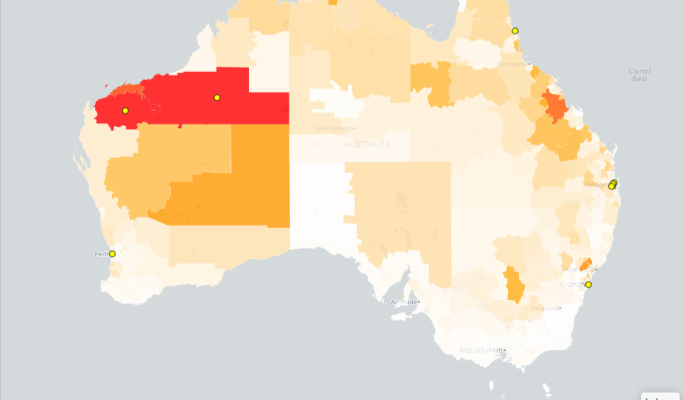

When the heat is on: Where Australia’s workers face greatest risk
Extreme heat is increasing workplace injury risk across Australia. Our new index identifies regions where workers face heat-related risk.
Read Article